

How cleaning businesses can get more clients with a high-converting website
Most cleaning websites look fine and book nothing. Why that happens, what a proper cleaning website looks like, and how to set one up that fills your calendar.
If you run a cleaning business, your website should be your hardest-working employee. It should answer questions, build trust, and book quote requests while you're elbow-deep in someone's oven. Most cleaning websites do none of that. They look fine, they sit there, and they generate almost nothing.
This guide breaks down why that happens, what a proper cleaning website looks like, and exactly how to set yours up so it starts feeding you leads instead of just existing.
Why most cleaning websites fail
The honest truth is that most cleaning websites are built like brochures. They tell visitors who you are, what you do, and where you work, and then they leave the rest up to chance. Three problems show up over and over.
1. No clear action
A homeowner lands on the page, reads a paragraph or two, and then has no idea what to do next. There's a phone number buried in the footer and maybe a contact form on a separate page. By the time they find it, they've already opened a tab for the next cleaner on Google.
2. Slow on mobile
Cleaning customers search and book on their phones, often while standing in the kitchen they want cleaned. If your site takes more than three seconds to load, half of them are gone. Most cleaning websites are built on bloated platforms that fail this test.
3. No system behind the site
Even when a quote request does come in, it goes to an email that the owner checks twice a day. Some leads get a reply two hours later. Some get forgotten in a spam folder. The customer who replied first wins the job, and that customer is rarely you.
What a high-converting cleaning website looks like
A site that actually books work follows a simple pattern. Every section moves the visitor one step closer to filling out the quote form. Every page is built for thumbs, not desktops. Every inquiry is captured, organized, and acted on within minutes.
A hero section that asks for the booking
The first screen shouldn't be a slogan. It should be a clear "what you do, who for, what to do next." A short headline that names the service and the city, a single primary button that goes to a quote form (not a phone number alone, not a generic "contact us"), and one trust cue like a review count or insurance badge. That's the three-second test, and most cleaning sites fail it.
Service blocks that let customers self-select
Rather than one giant "Services" paragraph, customers should see clear service categories: deep cleans, regular cleans, move-out, commercial, holiday lets. They click the one that matches their need and head straight to the quote form pre-filled with that service.
Trust signals up front
Cleaning is one of the most trust-driven purchases a homeowner makes. They are letting a stranger into their house. Reviews, before-and-after photos, insurance and bonding badges, and a real face on the page do more for your conversion rate than any amount of clever copy. Give each of these its own section. Burying them inside a generic "About Us" page is the same as not having them.
After

After
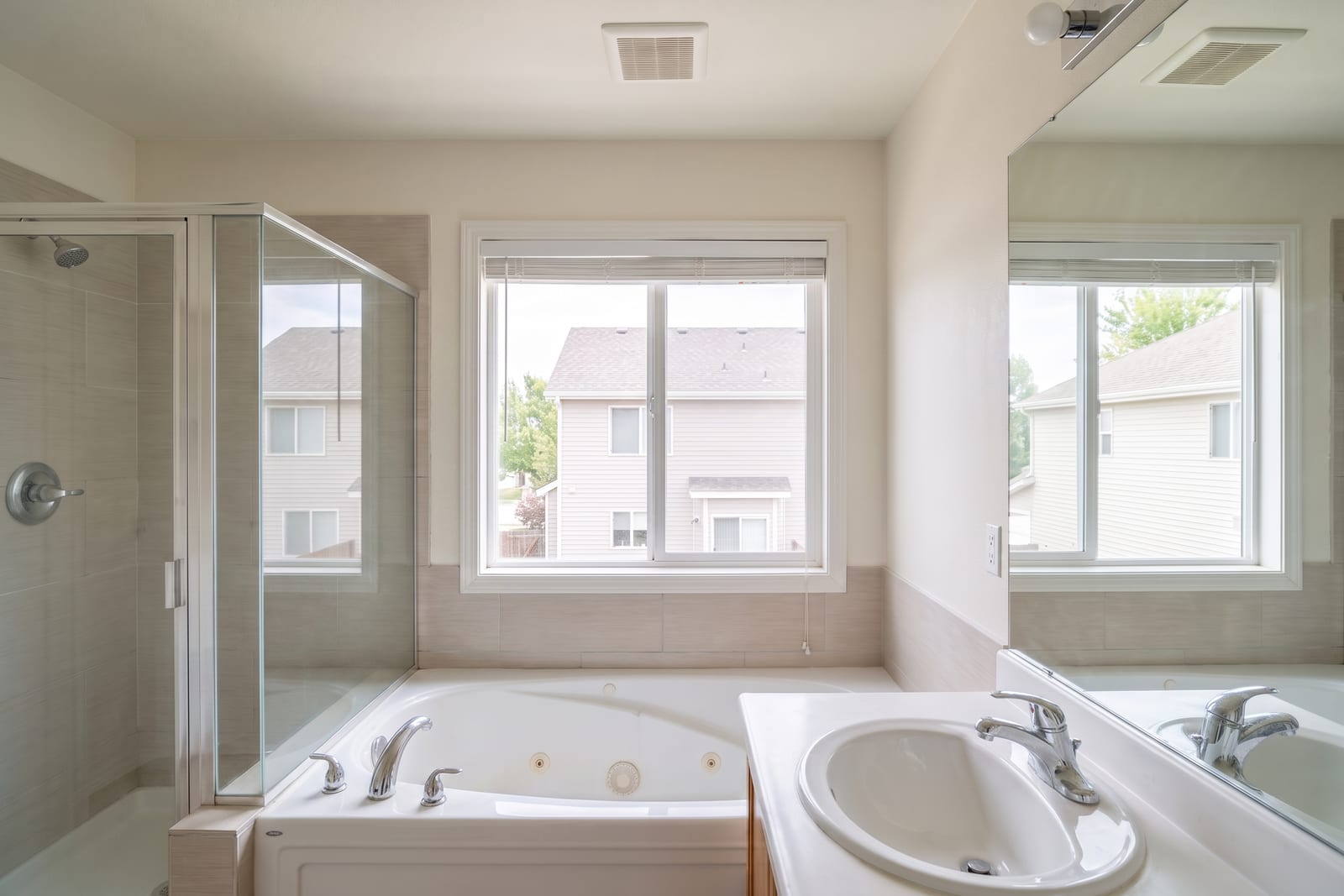
Pair these with the "before" shots from your real jobs and you have one of the highest-converting sections on your site.
A quote form that actually qualifies
A "name and email" form gives you nothing. A proper cleaning quote form asks property type, size, services, frequency, and preferred date. By the time the lead hits your inbox, you already know if it's worth quoting and what to charge.
5 min
Reply window for max booking rate
1st
Cleaner who replies first usually books the job
Most
Cleaning searches start on a phone
What should happen after a quote request arrives
This is the part most cleaning websites skip. A great-looking form is only useful if the leads it generates actually reach you and don't slip through later. The flow that consistently turns inquiries into booked jobs is the same one used by every well-run cleaning operation:
- Two-channel delivery. Every form submission lands in your email AND in a simple tracker (spreadsheet, CRM, or built-in lead inbox). One channel always fails eventually. Two doesn't.
- Instant alert. A push notification or SMS to your phone the moment the form is submitted. Owners who only see leads when they check email next morning have already lost half of them.
- Stage tracking. Every lead moves through five states: new, contacted, quoted, booked, lost. If you can't tell at a glance how many sit in each stage, you can't tell what's leaking.
- Notes on every call. Two sentences per conversation. "Wanted deep clean before in-laws visit. Quoted $220. Said she'd confirm Friday." Future-you needs this when she calls back three weeks later.
- A weekly clean-up. Anyone stuck in "contacted" for more than 7 days gets one more chase and then moves to "lost." The list stays honest.
The pricing conversation that saves hours
Cleaning quotes turn into back-and-forth phone tag when the website hasn't done any pre-qualification. Three small additions to your services section close most of that gap:
- Hourly OR flat-rate ranges for each service. "Regular cleans from $35/hour" or "Deep cleans from $180." Customers self-filter, and the people who reach out are already in range.
- Square-footage tiers for move-out or deep cleans. A rough chart (up to 1,000 sqft / 1,000 to 2,000 sqft / 2,000+) does most of the math before the call.
- Add-on pricing for fridge inside, oven inside, windows inside, laundry. Customers love that they can see what extras cost without asking. You stop fielding "how much extra for the oven?" emails.
None of this commits you to a final number. It commits you to a range that filters out the wrong customers and warms up the right ones.
Practical advice for cleaning business owners
A good website is the foundation. These small extras turn it into a steady booking machine.
Show pricing cues, even if you don't list full prices
You don't have to publish a full price list. But "from $35 per hour" or "deep cleans from $180" filters out tire kickers and pulls in serious inquiries. Include it in your services section.
Respond within 5 minutes
Owners who respond in under 5 minutes book far more often than those who reply the next day. An instant push notification or SMS the moment a form is submitted makes this realistic, even when you're on a job. Even a quick "got your inquiry, I'll call you in an hour" wins the booking. The reply doesn't have to be the quote. It just has to beat the next cleaner on the homeowner's shortlist.
Lead with reviews
Ask every happy client for a quick review the day after the job. Pull the best three or four onto your homepage and service pages, with the customer's first name and suburb. Reviews from named locals close at a noticeably higher rate than anonymous "5 stars, would recommend" snippets, because they read like neighbours, not strangers.
Use real photos
Stock photos of mops are not convincing. Photos of your team, your van, your before-and-after work, and your real customers (with permission) are. Replace the placeholders in the template with your own as soon as possible.
Cover your service area properly
Add a clear list of suburbs or cities you cover. If you have time for one structural SEO investment, build a dedicated page for each town with the town name in the URL and headline ("Move-Out Cleaning in [Suburb]"). That single change is what gets cleaning businesses ranking in five or ten nearby suburbs instead of just the one they're based in.

The short version
A cleaning business doesn't fail because the work is bad. It fails because the phone doesn't ring often enough, and the leads that do come in fall through the cracks. The fix is rarely a redesign. It's a hero that asks for the booking, a quote form that pre-qualifies, trust signals on every screen, and a system behind the form that gets you to the customer inside five minutes.
Get those four right and the same amount of marketing traffic produces noticeably more booked jobs. Nothing else on a cleaning website matters as much.